GIPPSLAND ART GALLERY TRAIN TRIP
A meet up with Gippsland members and a visit to Gippsland Art Gallery was held across 20-22 May.
Public transport was free, so we literally had a free return train trip to Sale. It was very smooth, comfortable and time passed quickly.
Arriving at Sale station we were picked up by Cynthia and Ngaere and there began almost non-stop art discussions.
We stayed at The Matador Motel a very short walk to the Gippsland Art Gallery and many eateries.
After a friendly cuppa we walked along Raymond Street to the Star Hotel for dinner.
Some who stayed in Stratford joined us and again at the gallery on Thursday.
Due to meet the gallery Director, Simon Gregg at 10am, the motel room included breakfast which we enjoyed as a leisurely pace.
Simon introduced us to the history of the gallery that was established in 1965. He had travelled to Sale with the intention of staying one year and some fifteen years later continues his passion for the Gallery and its collection.
As Gallery Curator in 2015, Simon wrote and compiled Hindsight_Gippsland Art Gallery
History & Collections 1965-2015. The publication was produced in conjunction with the refurbishment of the gallery and supported by Patron and later Benefactor John Leslie.
With its focus on the Gippsland region, its artists and environment the gallery holds some 15,000 pieces of artworks ranging through many artistic disciplines.
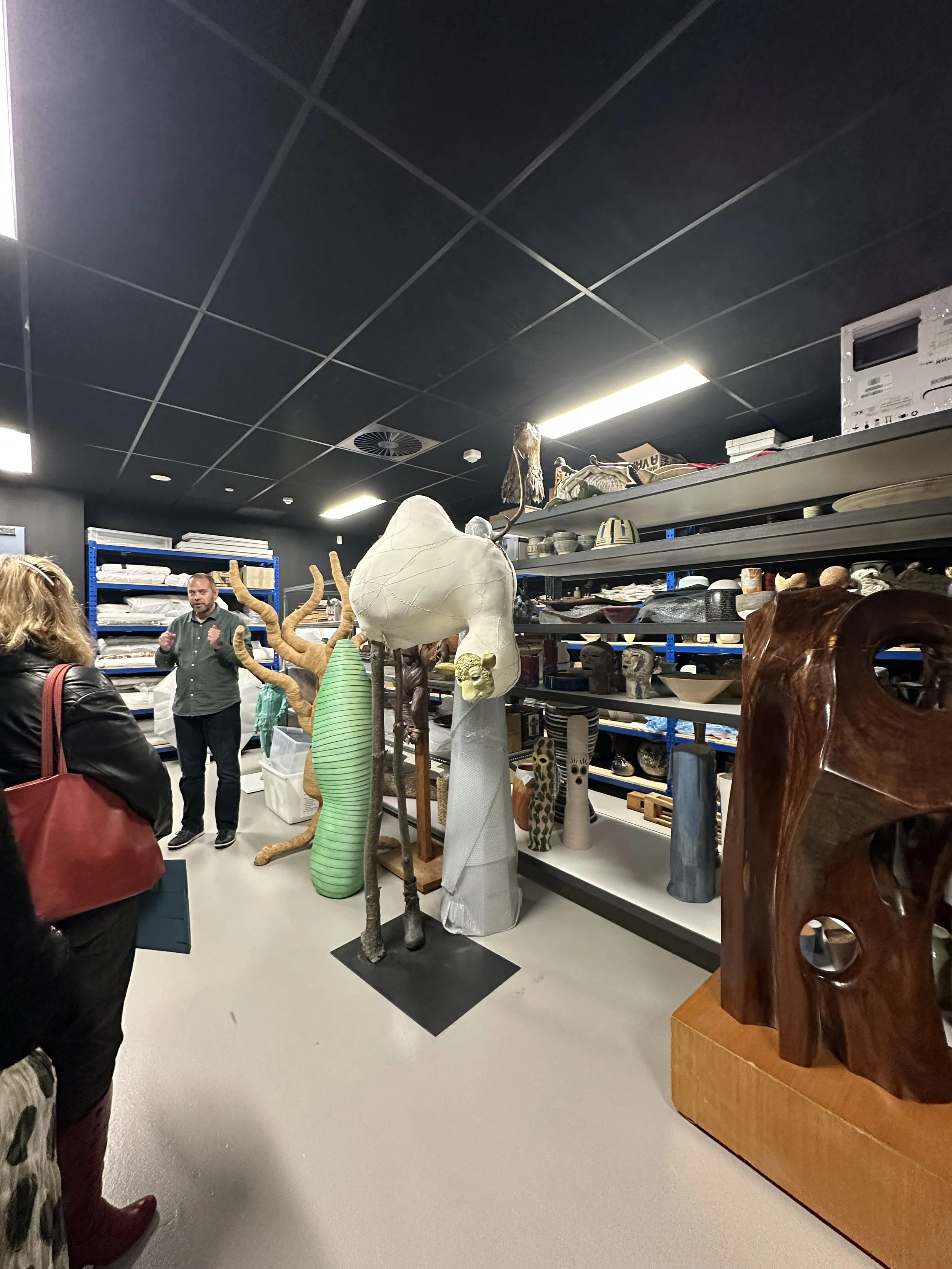
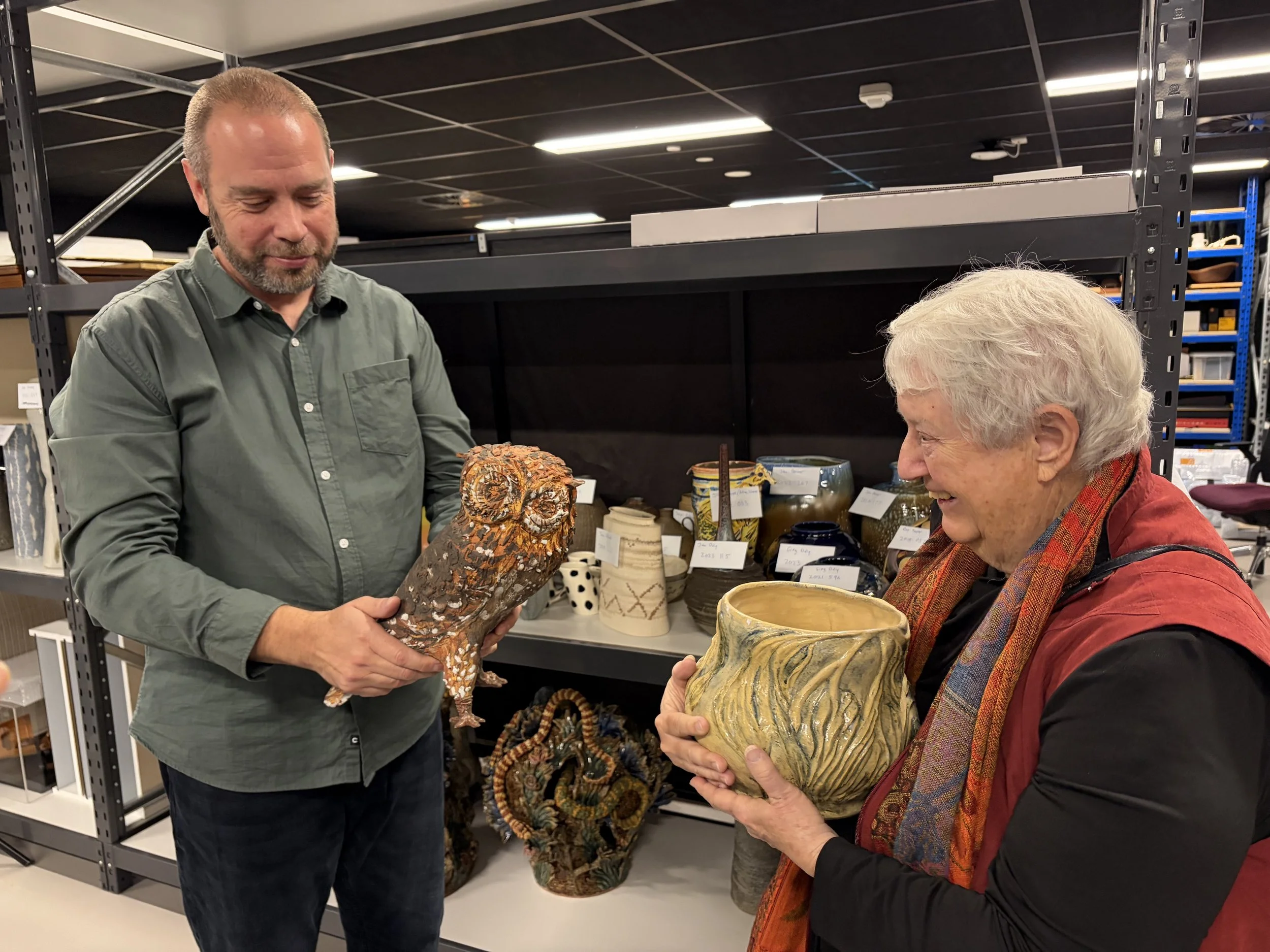
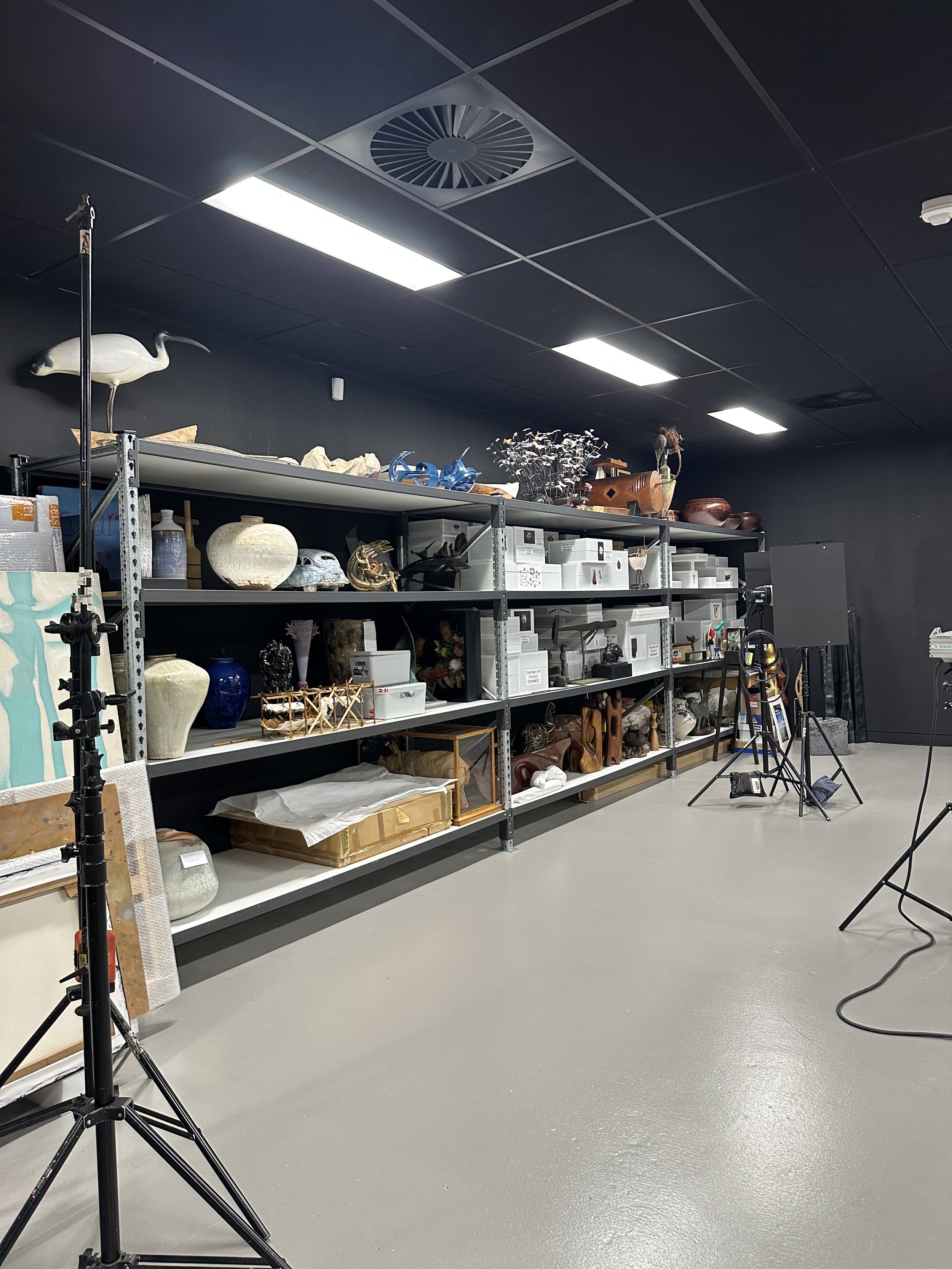
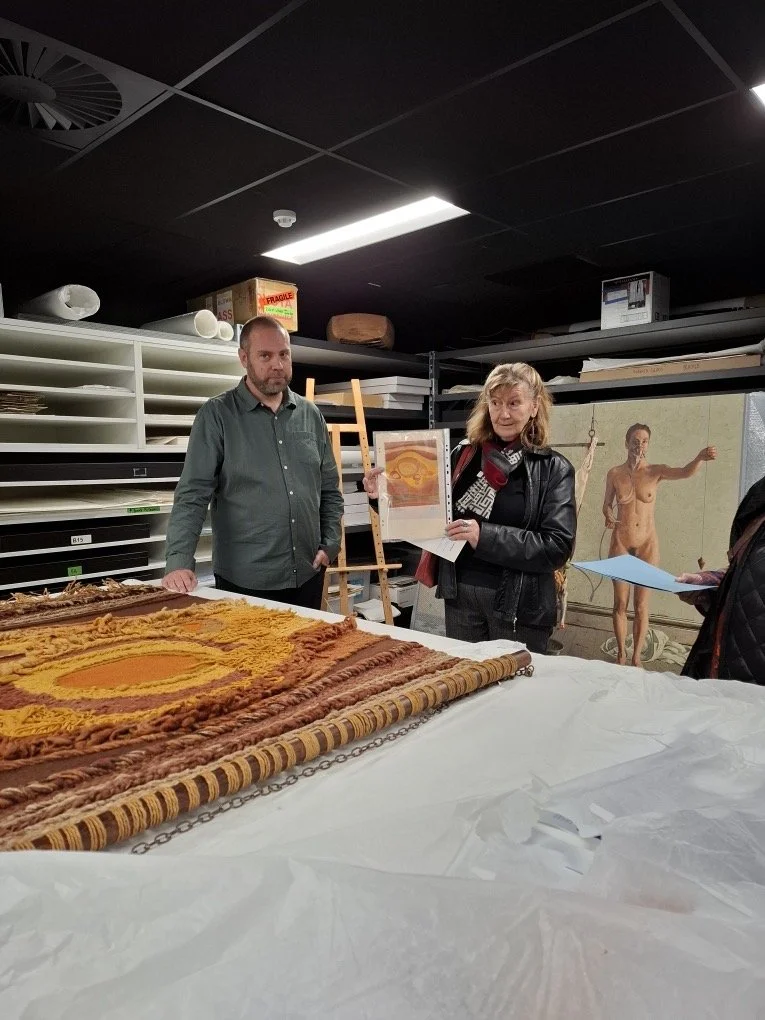
Multiple shelves contain ceramics, small sculptures, historic hard copy data, and textiles.
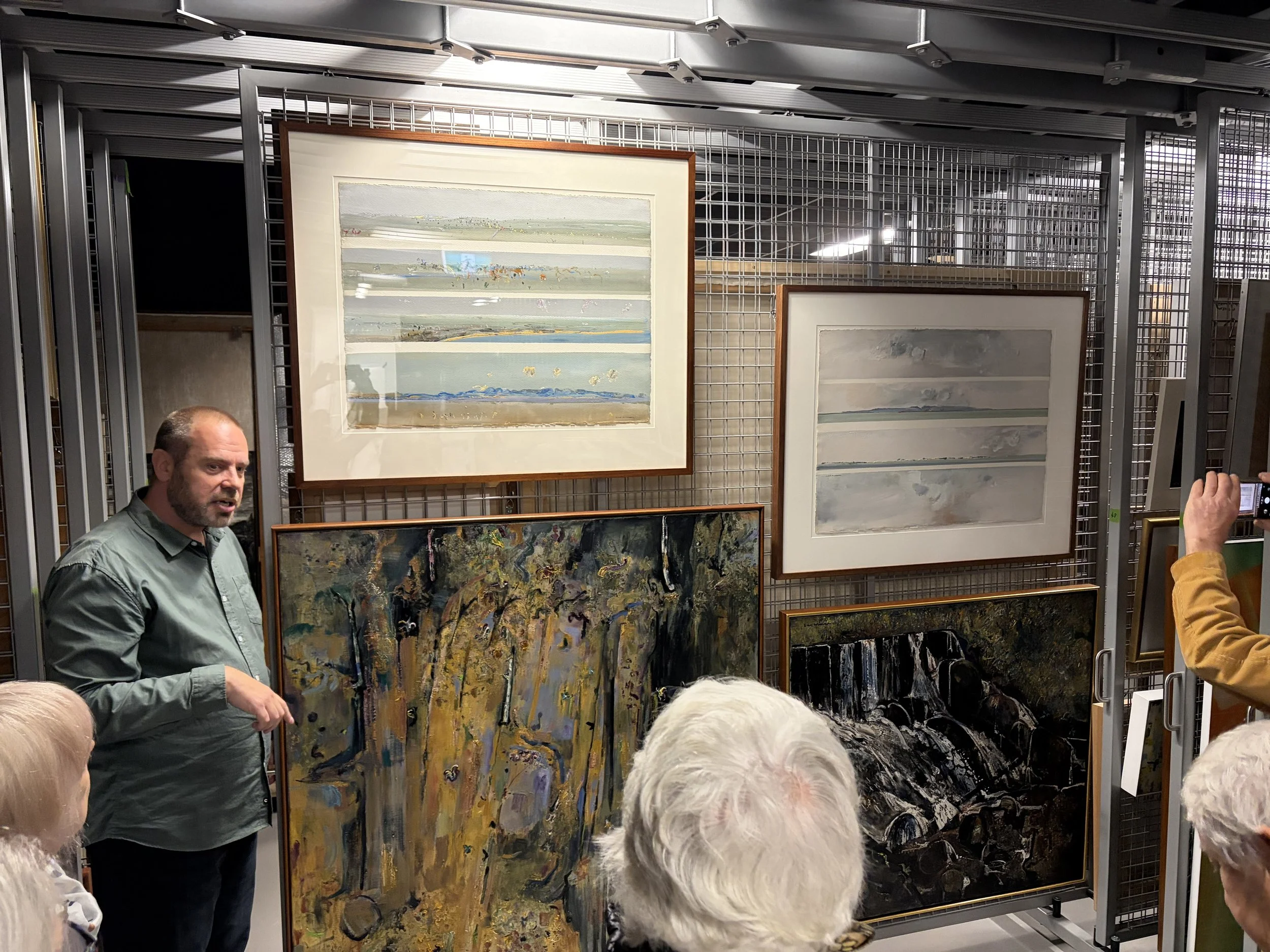
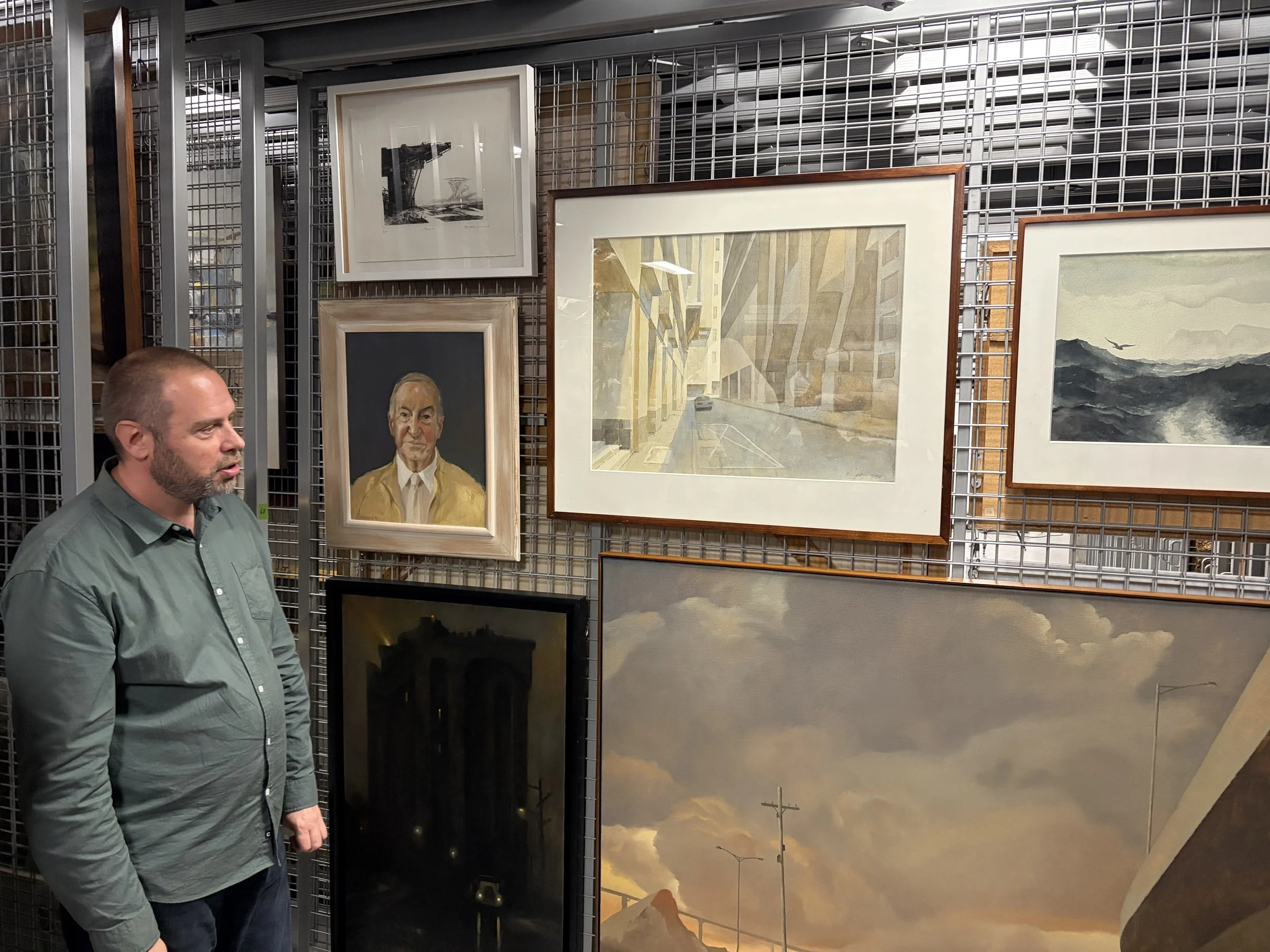
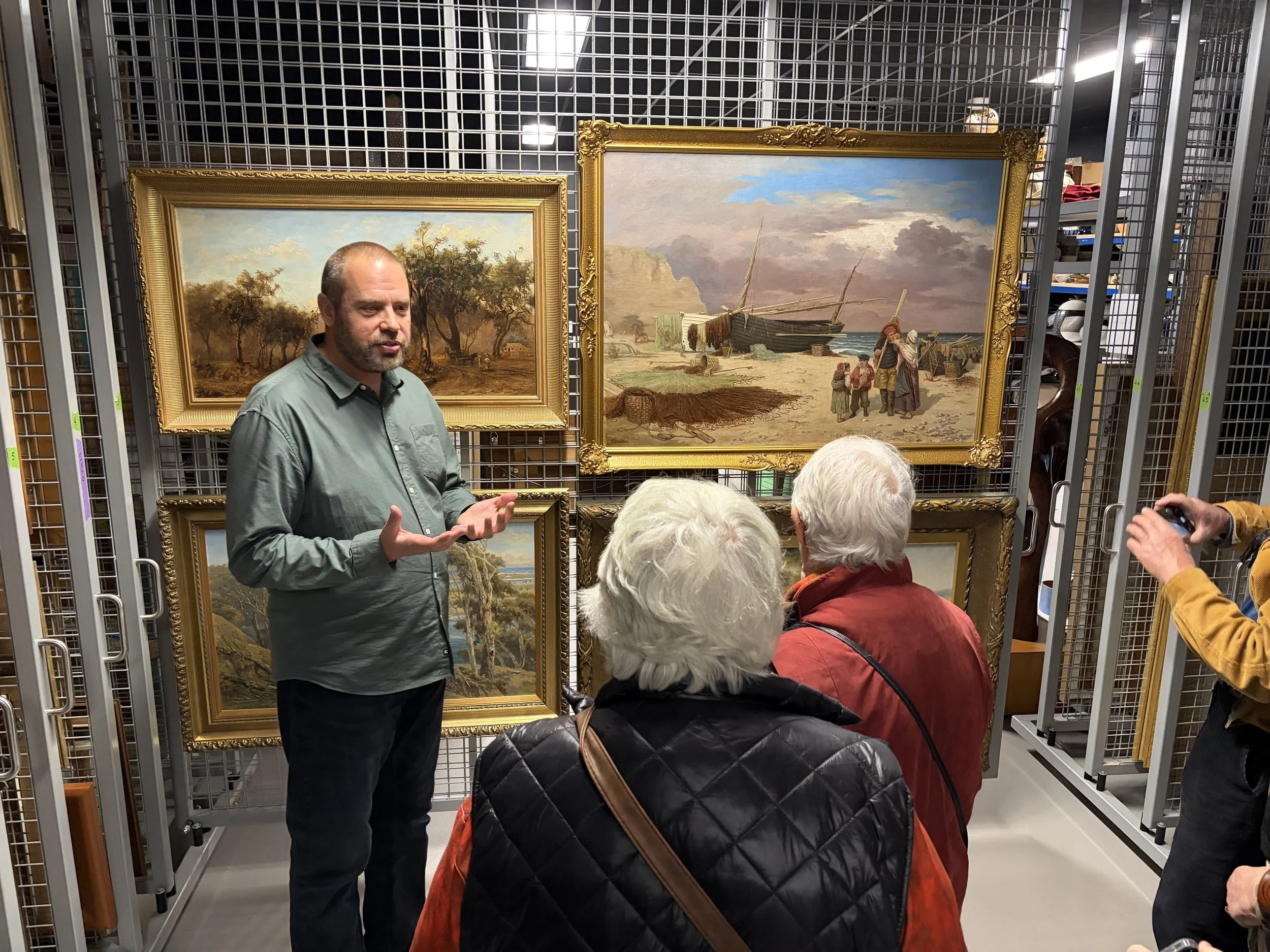
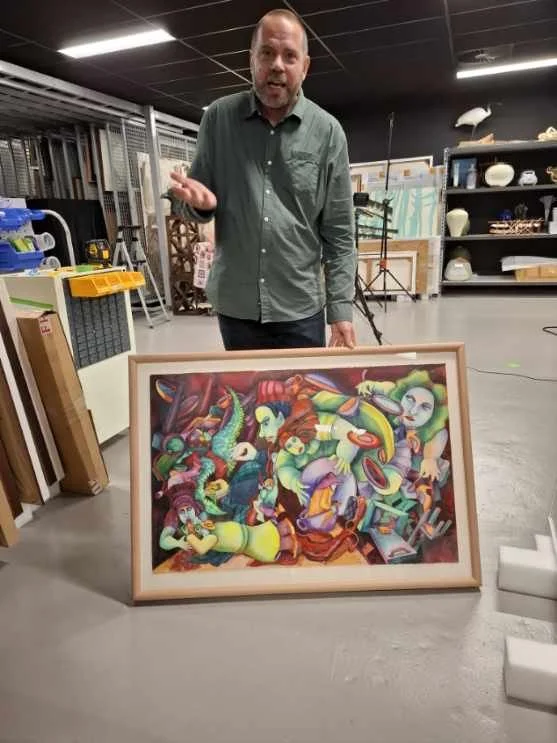
Two walls of racks house paintings and prints, some dedicated to one artist. We were shown works by Rick Amor, Fred Williams, Julie Haas and 19th C artists Charles Rolando and Robert Dowling,
Donations to the gallery continue at a pace that we saw artworks stacked on shelves and against walls waiting to be documented and safely stored.
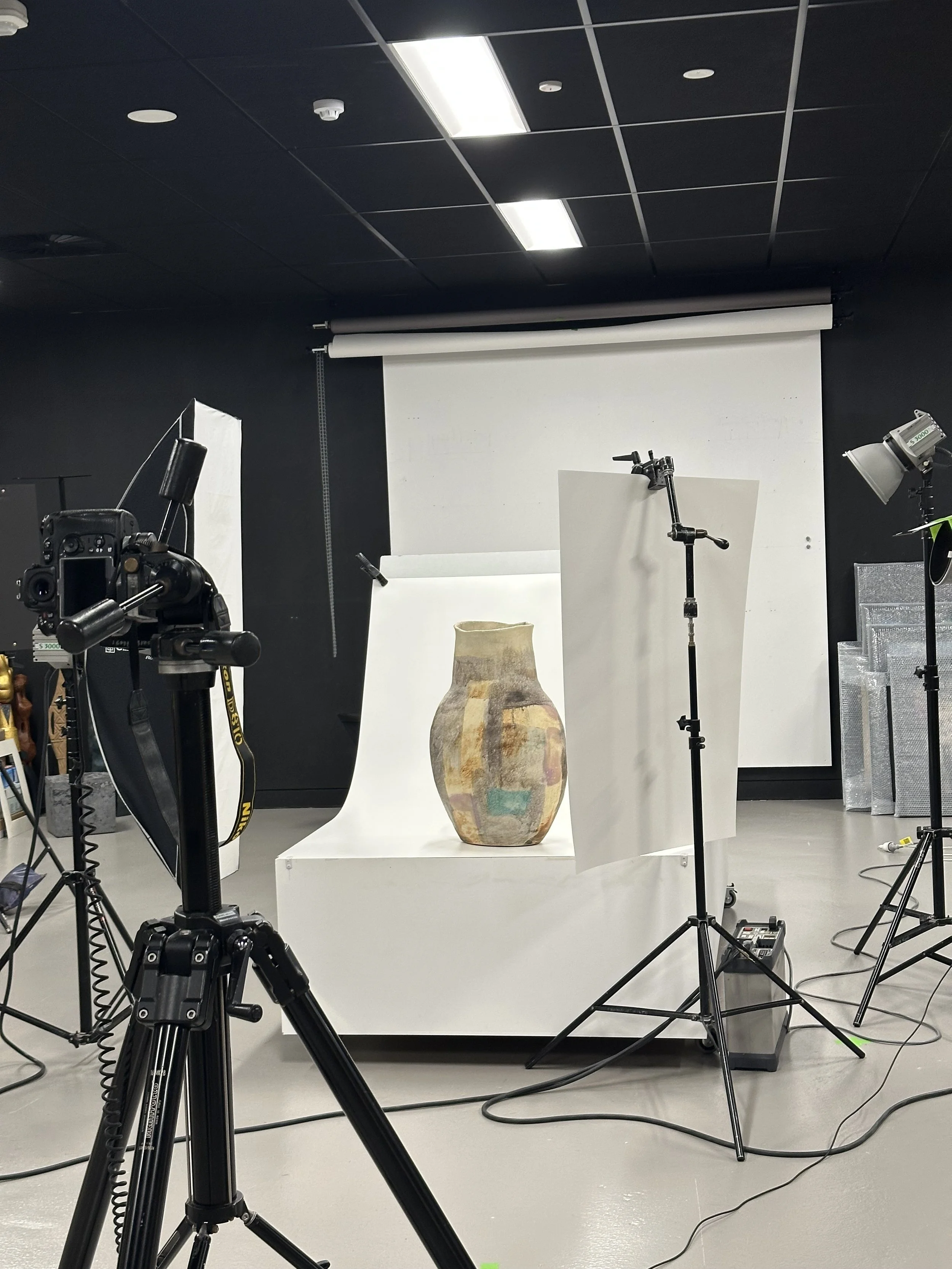
A dedicated area is set aside for photographic documentation and limited restoration. The area is temperature controlled with the collections manager on site.
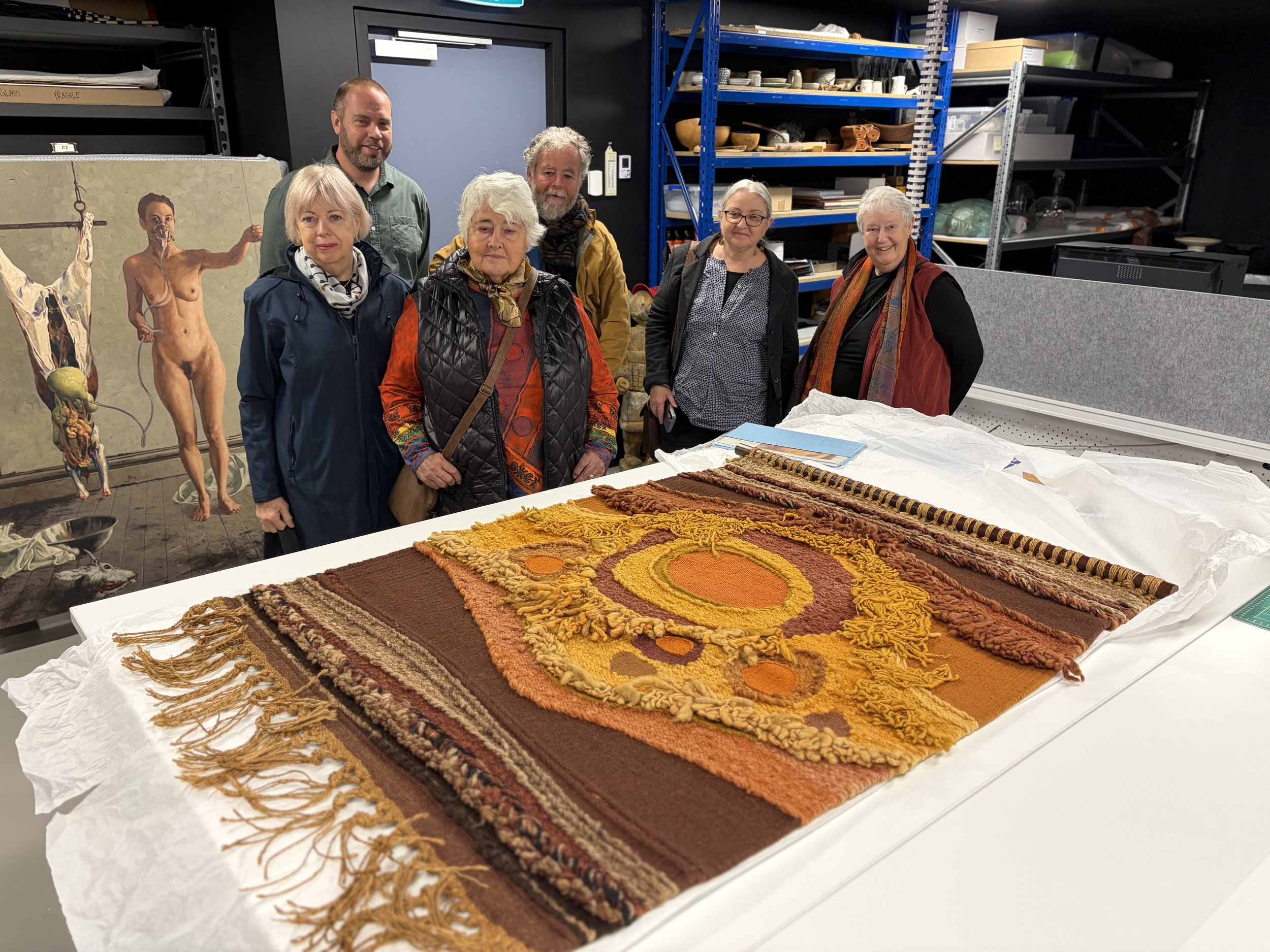
My history with Simon goes back to our days studying at RMIT, where he thought he would be an artist, then changed to curation. We had discussed the tapestry of Alison Magilton, held in their collection. It was on display for our group, and I was pleased to present Simon with the original drawing for the tapestry, purchased by the gallery in 1975.
After one and a half hours we were full of awe and appreciation of the time that Simon gave us. It was quite thrilling to be in the collections storeroom and gain a detailed insight to the growth and continuing work being undertaken by Victoria’s first public art venue east of Melbourne.
With heads whirling we set of for lunch as the gallery café is currently closed for updating.
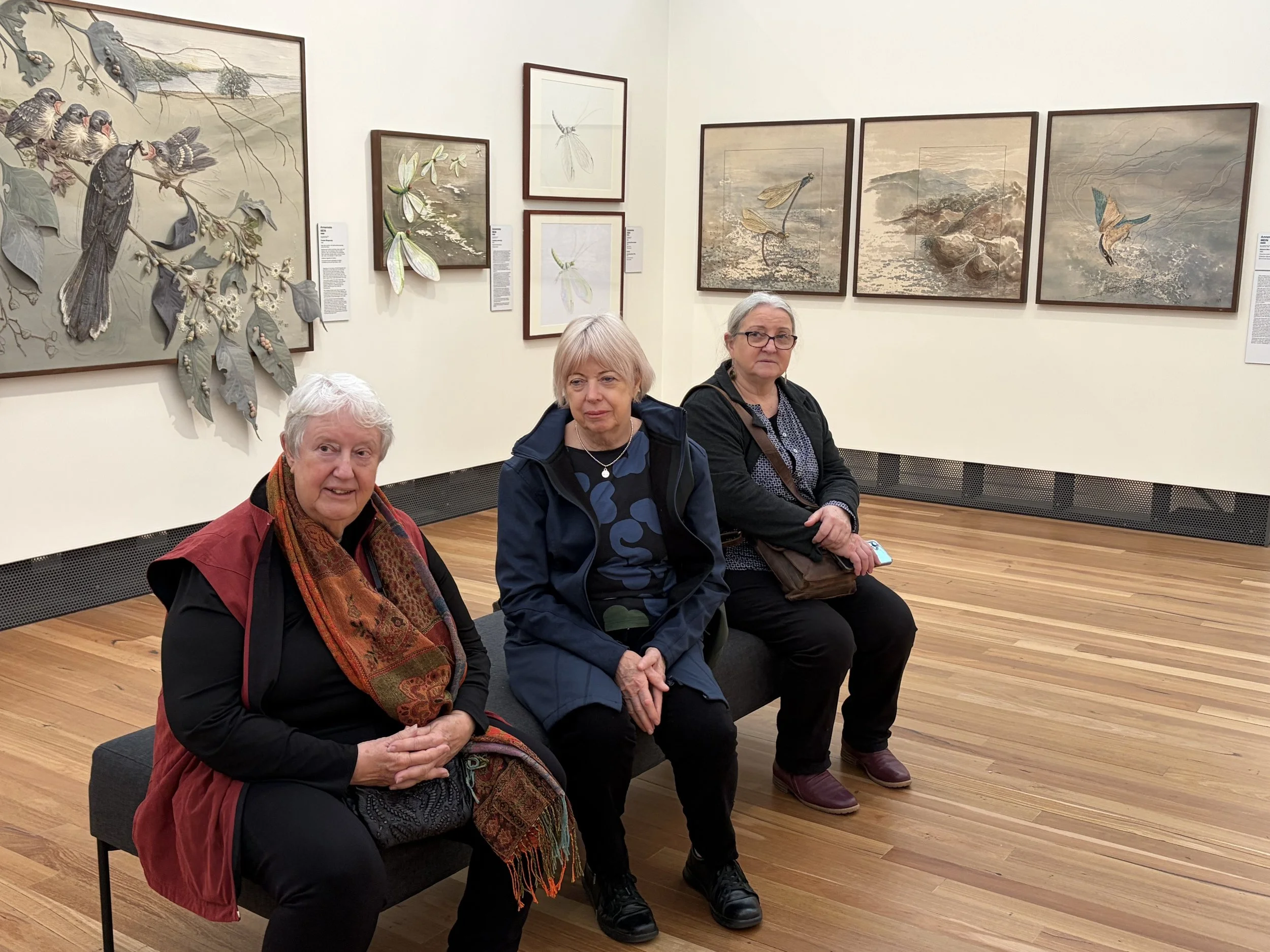
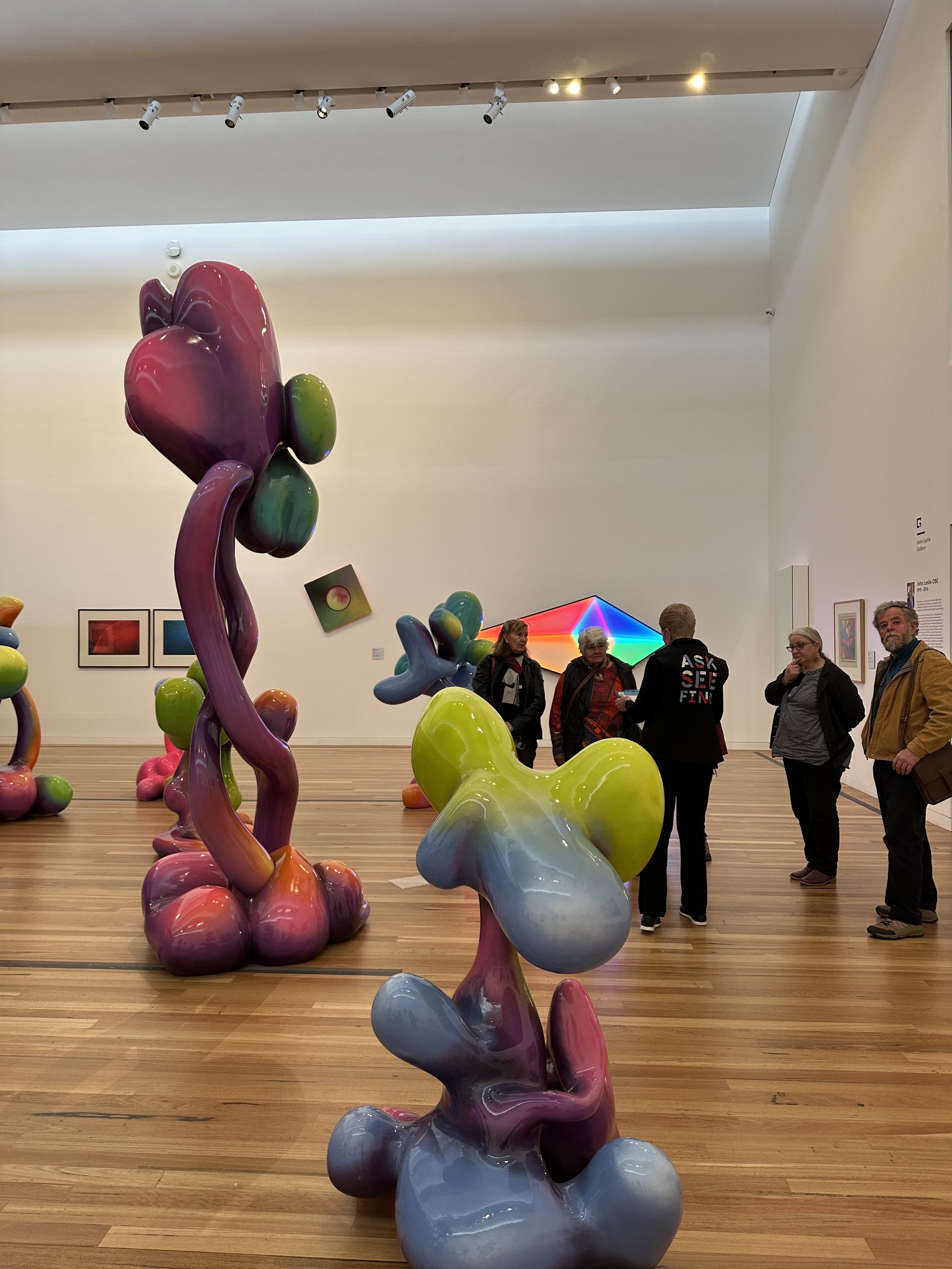
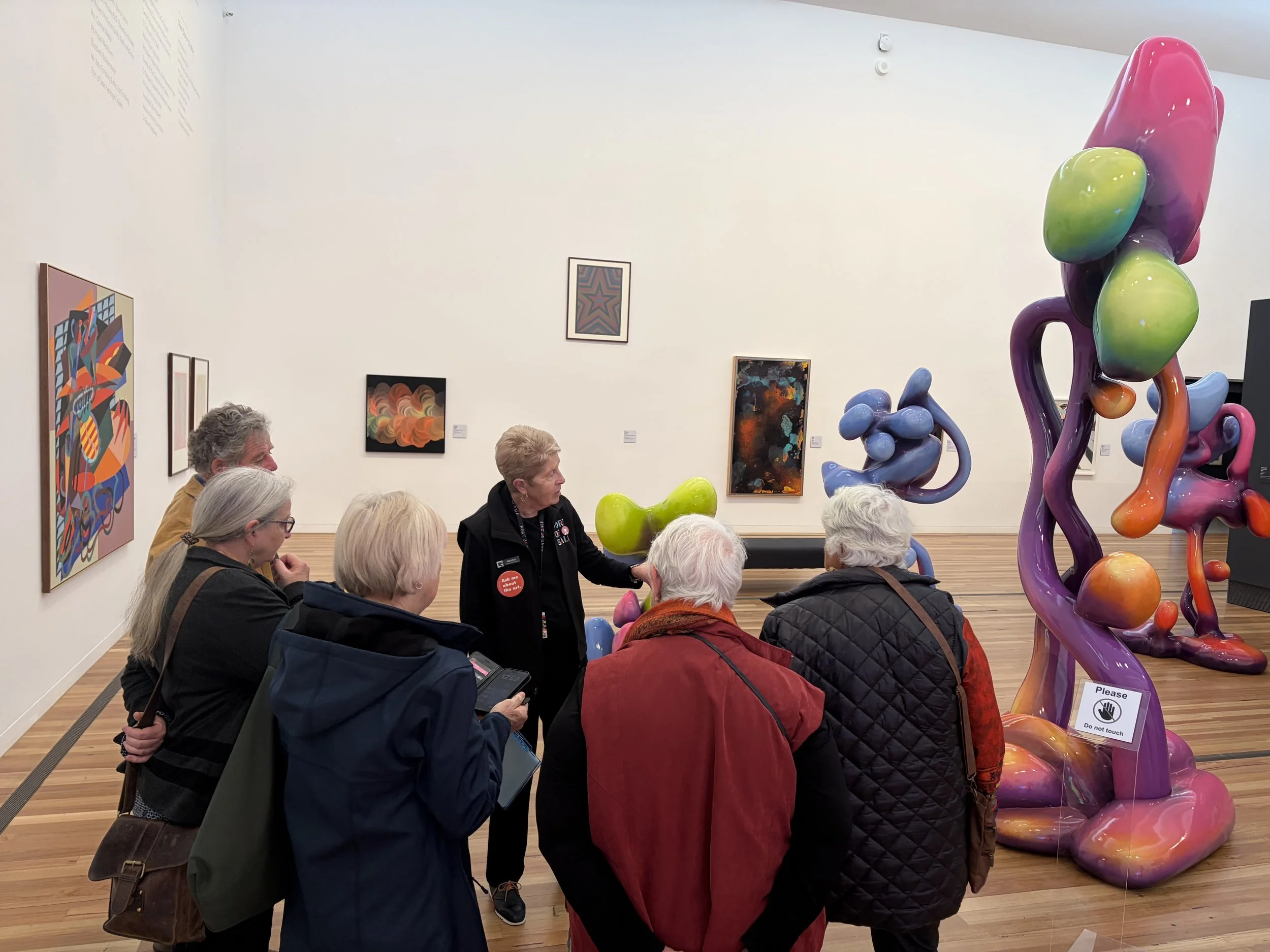
Gallery guide, Marilyn met us at 1pm to take us on tour through the current exhibitions in three exhibition galleries. Two extra galleries are dedicated to the region’s indigenous artists and local artist Annemieke Mein.
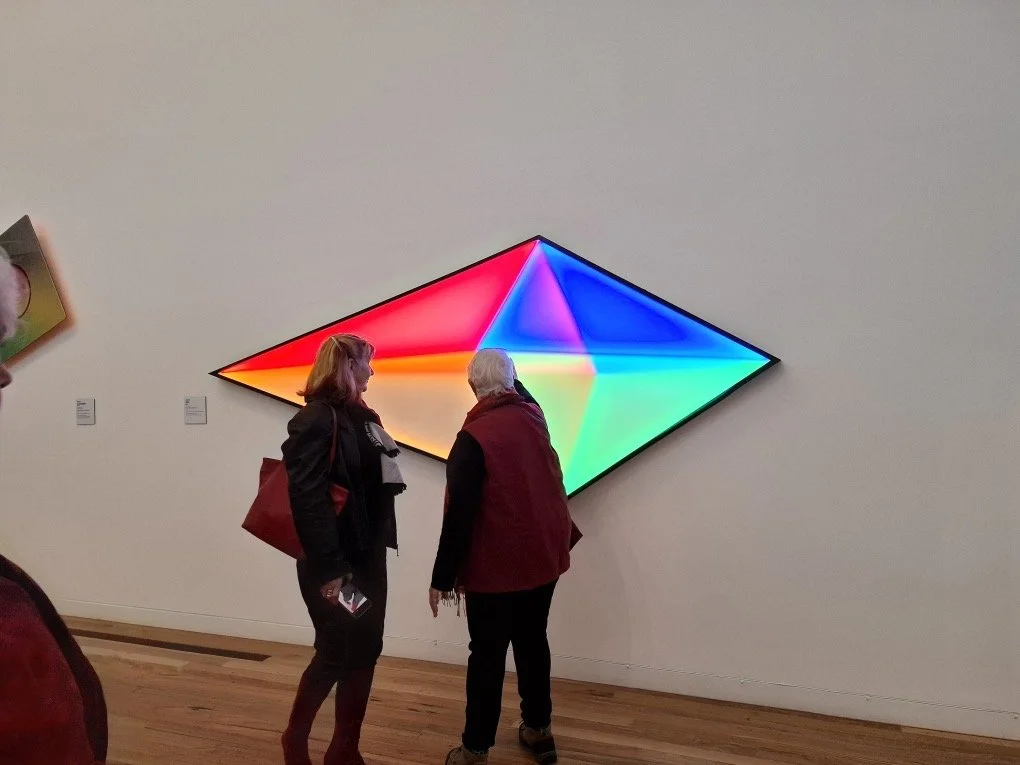
The three temporary exhibitions closed on Sunday 24 May. Our trip was planned to include these shows. Shaping Ideas explored how thinking unfolds through making, testing ideas with shape, colour, materials, and process. I was very pleasantly surprised to see a Sol Le Witt on the wall.
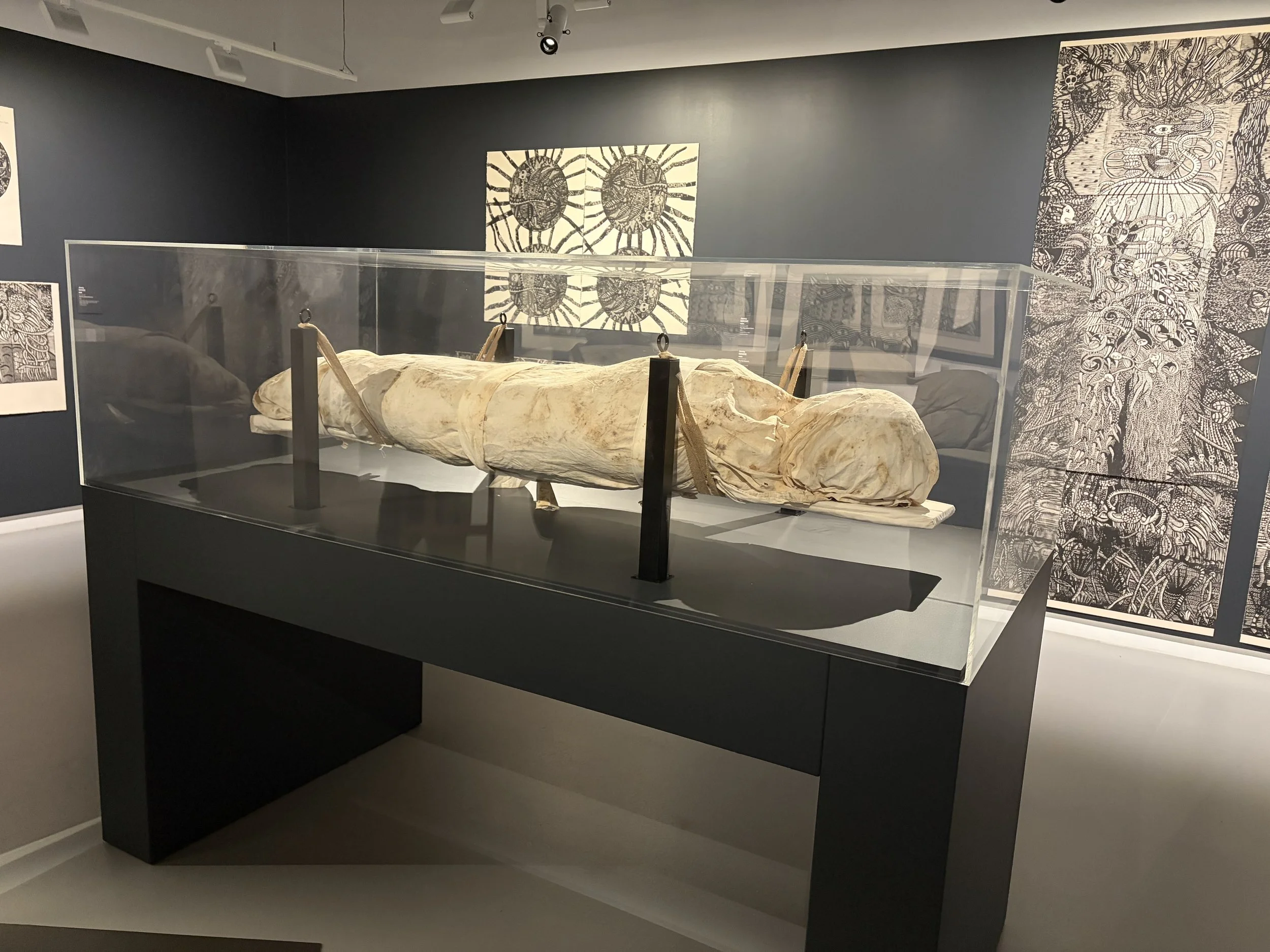
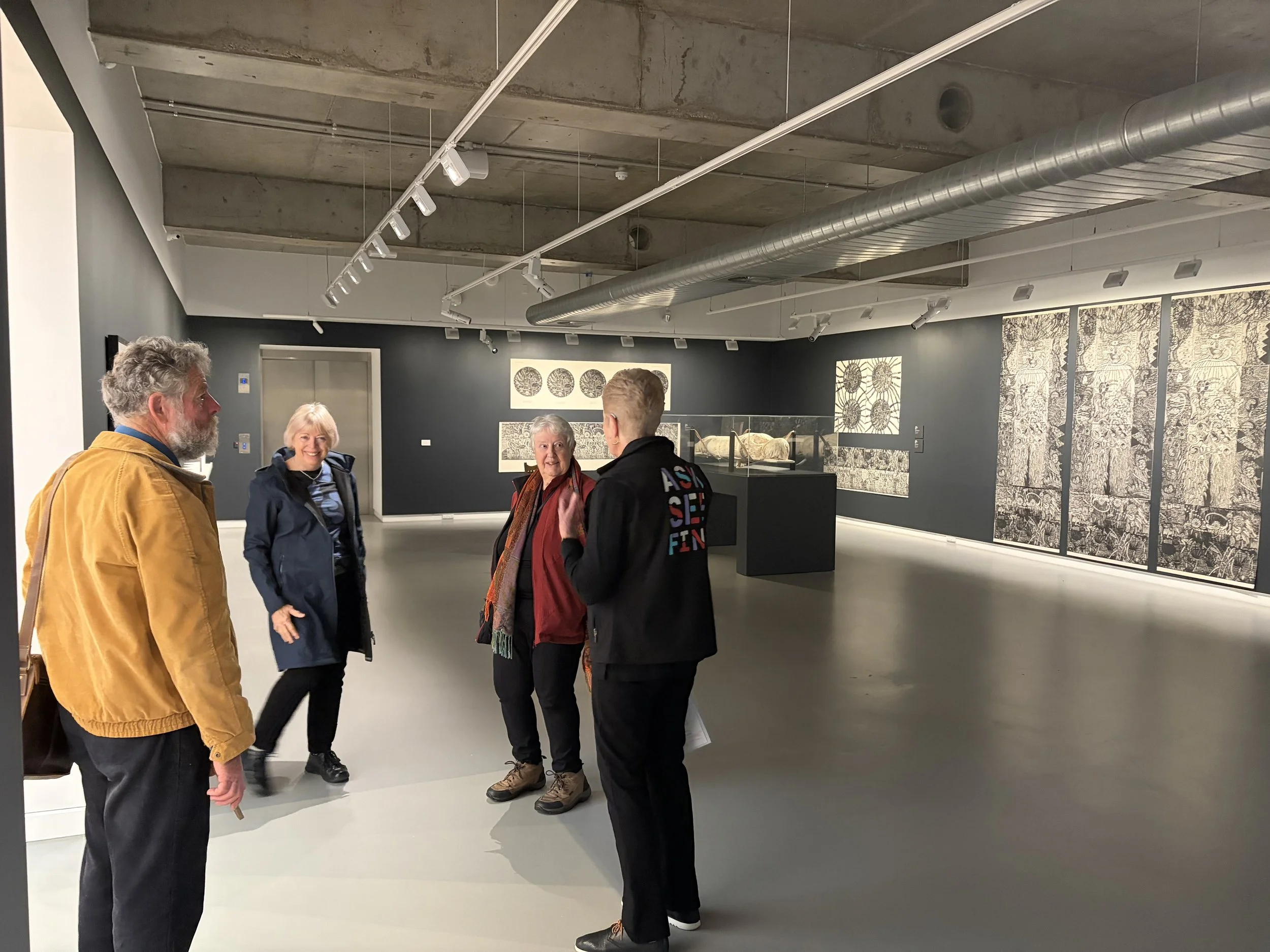
In gallery two was a one person show by local artist Jenny Noone
Utilising relief prints, Jenny investigates myth, memory, and meaning. It was impressive to see that she carves small lino plates that are then arranged and rearranged to create a broad body of artworks. The starkness of black and white draws one in to look at details that can get lost with colour. Working in stark black and white relief prints, Noone creates images that feel both contemporary and ancient. A superb one person show.
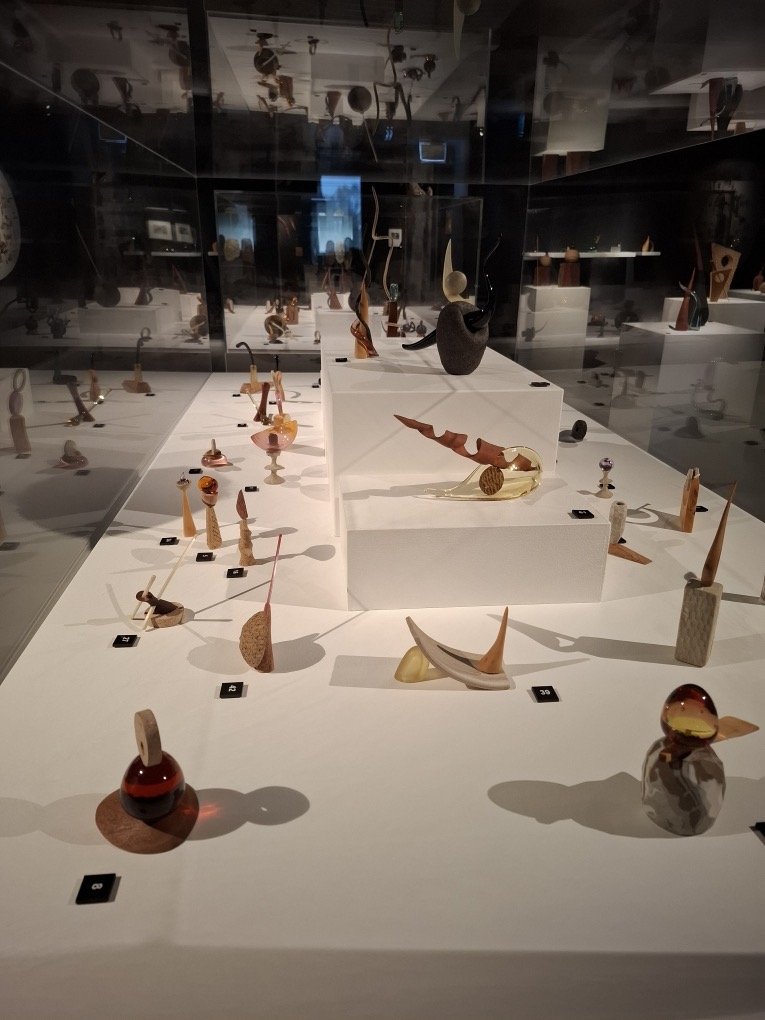
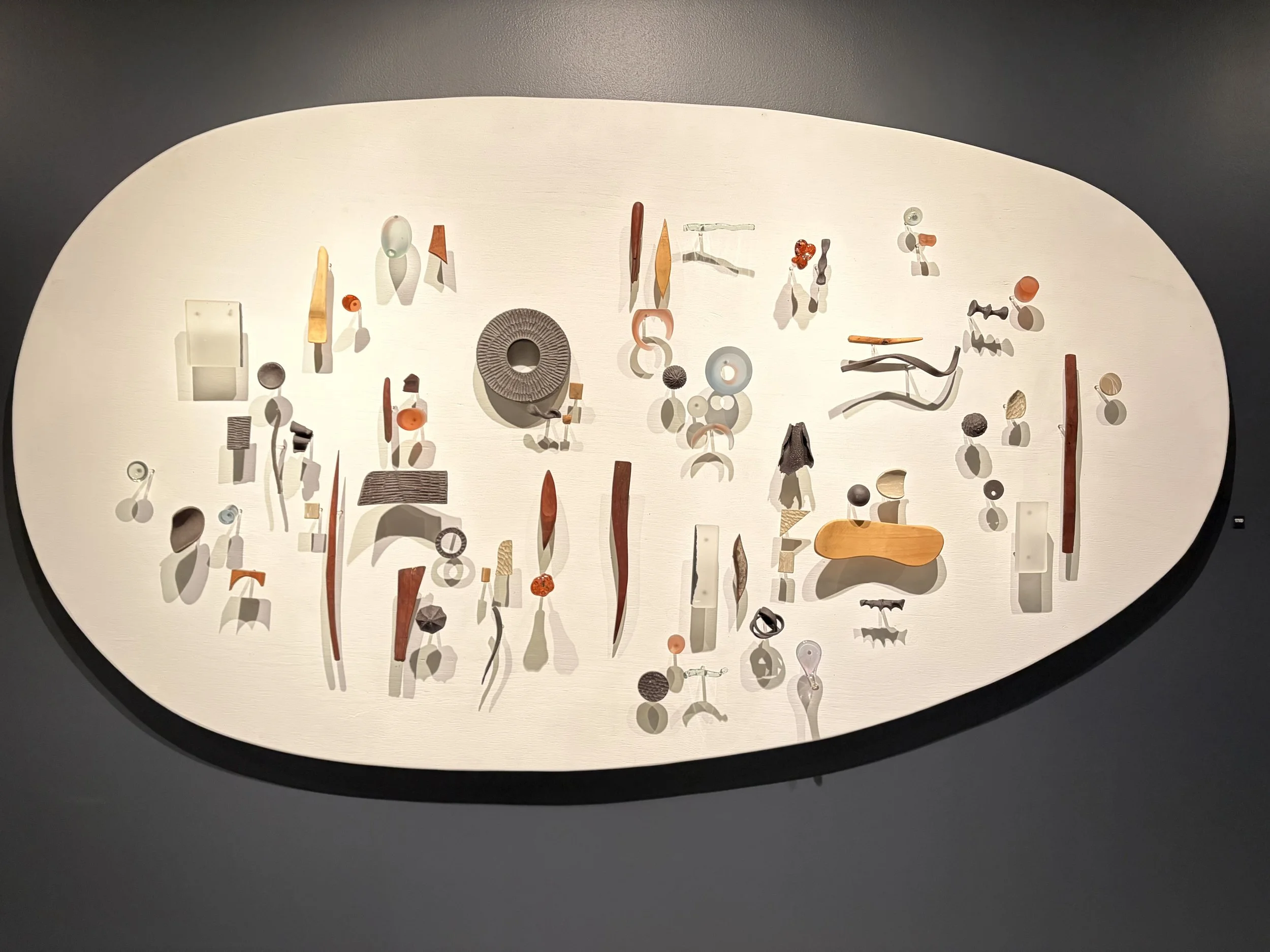
Gallery three showcased a collaborative exhibition by three local artists working with different mediums. These individual practices converge. Glass, wood, and clay – materials often considered in isolation – are reimagined together through a process of collaboration and play.
The artworks were available for sale with 25%of sales directly supporting a Youth Arts Education Program for young people aged 15-23.
A most enjoyable collaborative exhibition. As usual I endeavoured to pull it apart to work out the process. Several significant large sculptural pieces were well considered and presented as complete. The small works, priced to sell and all made this year had a feeling of play. I felt that the artists had individually created multiple forms within their own disciplines. They could have then joined together to ‘play’ with the pieces to create a mass of quirky, interesting tiny sculptures. The installations may have been the leftover pieces; however, design, placement and presentation were excellent.
The Gippsland Art Gallery conduct several public programs that include a research library, education activities, and art workshops. The research library is currently accepting donations for the collection.
Entries are now open for the 2026 John Leslie Art Prize and close on July 17.